


If you’re searching for how to calm a stressed dog, your dog might be showing common signs of stress in dogs, maybe they’re pacing, trembling, or suddenly way cuddlier than usual, won’t leave your side? While we hope that a good long walk or some cuddles are all a restless, stressed dog needs, often a stressed dog is one that doesn’t feel safe in their environment, though luckily there are many ways you can help your stressed dog feel calm, safe and supported. Understanding the signs of stress in dogs can change your dog’s entire world, helping you support their inherent instincts and emotional health before they reach a breaking point.
At CBD Dog Health, we believe that true wellness comes from a “Do No Harm” philosophy that looks at the whole picture. This means using tools like routine changes, dedicated safe spaces, and clear communication, and when they need that extra natural support, integrating high-quality CBD pet products to help bridge the gap between a frantic mind and a focused, happy dog.
Table of Contents
What Stress Looks Like in Dogs
It is incredibly easy to confuse a stressed dog with one that is just over-excited or momentarily scared. Generally, excitement is a “high-arousal” state that is fluid and happy, think wiggly butts and play bows. Fear is usually a quick, sharp reaction to a specific threat, like a sudden loud bang. Stress in dogs, however, is often more of a lingering state of emotional pressure that stays in the body long after a trigger has passed.
To effectively help your pet, you have to recognize the critical signs of stress in a dog:

Reading the Body Language of a Stressed Dog
Sometimes the signs of stress in a dog are loud and obvious, but more often, they are about how your dog is moving or holding their body. To really understand what your dog is trying to tell you, you have to look at their full-body.
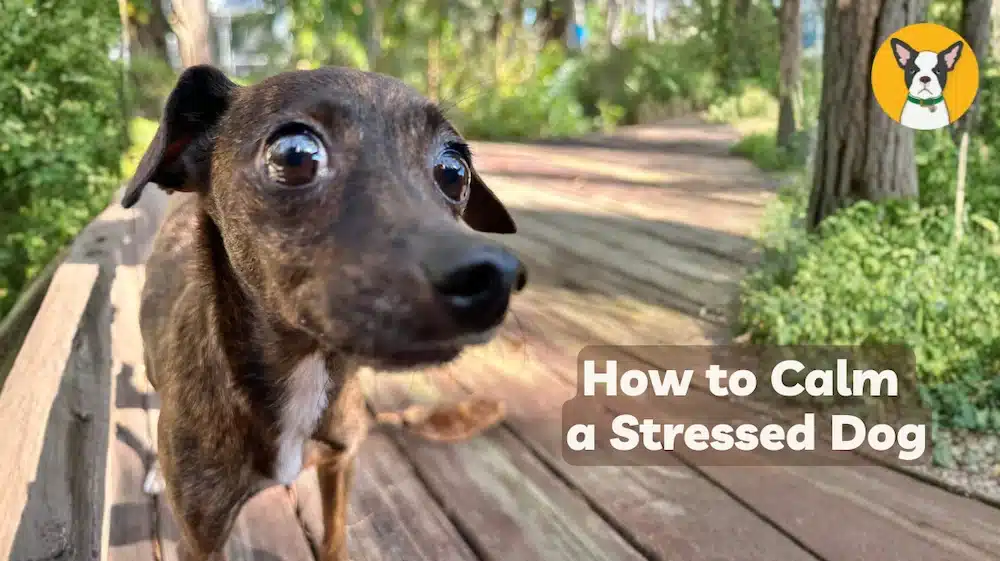
A dog’s face is usually the first place tension shows up. One of the biggest giveaways is “whale eye”, think of it as that ‘wide-eyed’ look where your dog’s eyes get really big and bug-eyed, showing the white parts as they nervously track what’s going on around them without wanting to move their head. Look for intense, prolonged yawning that looks different from a sleepy yawn. Watch for repetitive lip licking (when there’s no food involved) or pinning their ears back tight against their head. These are clear “I’m not comfortable” signals.
In addition to your dog’s face, keep an eye on their breathing. You might see your dog panting even when it isn’t hot or they haven’t been exercising—this is often a way of “off-gassing” emotional tension. This kind of panting is usually shallower and faster than a normal cooling pant.
You might also notice their body weight shifting to their back legs so they can retreat quickly, or a very low, stiff tail wag. And keep an eye out for the “shake off”, that full-body wet-dog shake they do even when they’re dry. It’s like a biological reset; they are literally trying to “shake off” the stress.
Noticing Physical and Behavioral Shifts
Beyond just their posture, stress in dogs often manifests as sudden changes in how they interact with their world or how their body functions. These aren’t just “bad habits”; they are responses to a nervous system under fire.
One major sign is a change in social behavior. Your pup might suddenly become a “velcro dog,” following you from room to room because they don’t feel safe enough to be alone. On the flip side, some dogs will do the opposite and seek out a dark corner to hide in.
The gut is also directly tied to the brain, which leads to some of the most common physical signs of stress in dogs. You might notice sudden digestive upsets, diarrhea, changes in diet, a total refusal of their favorite treats, or even “accidents” and urgent peeing in the house, even if they’ve been house-trained for years. These aren’t acts of defiance; their bodies are simply struggling to maintain balance while under pressure. Dogs can also “blow” their coat, shedding massive amounts of fur at once, due to stress.
What’s Triggering your Dog’s Stress?
Pinpointing the cause of stress in dogs isn’t always a straight line. Sometimes it’s obvious what’s stressing your dog out, and other times it’s just a series of small triggers that accumulate and cause your dog to feel stressed and unable to settle comfortably.
Situational Triggers
There’s lots of times we can easily understand what’s stressing our dogs out. You don’t need a background in animal behavior to know that a booming 4th of July firework display or a trip to the groomer’s (with all those high-pitched dryers and barking, overstimulated dogs) is a lot to handle for any dog.
These are the situational moments where your dog might need extra support from you, in order to feel calm and safe. Pay attention to your dog’s triggers, whether it’s you leaving the house, traveling or car rides, grooming or veterinary appointments, having guests over, or other common events that cause stress in dogs.
In these moments, it’s helpful to remember that your dog isn’t acting out, they’re just having a very real, very normal reaction to a situation that feels completely overwhelming. This is where you can step in as their advocate. Supporting them in these high-stress moments might mean bringing a favorite blanket or toy along for comfort, or a frozen lick mat to keep their brain busy, or using a high-quality CBD for dogs to help take the edge off before you even pull out of the driveway. It’s about giving them the tools they need to stay grounded, no matter where you are.
When Small Stressors Pile Up
On the other hand, sometimes stress in dogs isn’t about one big, scary event, it’s just the result of a stressful day. Just like a stressful day can sometimes cause us to snap at those around us, dogs have those days, too.
Maybe the neighbor’s dog barked at the fence all morning, then you were twenty minutes late with dinner, and then a delivery driver rang the doorbell right as they were finally falling asleep. None of those things are a huge deal on their own, but when they happen back-to-back, your dog’s fuse gets shorter and shorter. When your dog is feeling stressed, they can use extra support from you, to help find their emotional balance
Stress From the Inside Out
Sometimes, the cause of stress in dogs isn’t something happening to them, but something happening inside them. If your dog is dealing with low-level joint pain, a toothache, upset stomach, or even itchy skin, they’re naturally going to be feeling stress. They can’t tell us when they have a nagging ache or discomfort, so they show us through restlessness, pacing, or a sudden inability to settle down.
The gut also plays a massive role here. We now know there is a direct “gut-brain axis,” meaning an imbalance in your dog’s digestive system can actually send stress signals to their brain. If their microbiome is out of balance, it can cause a “fuzzy” or frantic feeling that makes them much more reactive to the world around them. This is why supporting a healthy gut is just as important as providing a quiet home when it comes to a stressed dog.
Boredom and Lack of an Outlet
It might sound strange, but a lack of “work” is a huge source of stress in dogs. Dogs were born with natural instincts to sniff, dig, forage, and problem-solve. When they spend all day on a couch with nothing to do, that pent-up energy has nowhere to go, so it turns into internal tension. A bored dog is often a dog looking for something to worry about. Providing enrichment for dogs, like a “sniffari” walk or a puzzle toy, isn’t just about fun; it’s about giving their brain a job so it doesn’t default to a state of stress.
Stress in Senior Dogs
As our dogs enter their senior years, the world can start to feel a lot more unpredictable. Changes in vision or hearing can make sudden movements or loud noises much more startling than they used to be. For some seniors, cognitive changes can lead to a general sense of confusion and stress, especially in the evening. This internal “brain fog” is a major source of stress for older pups, and they often look to us for extra guidance and reassurance to help them navigate a world that’s starting to feel a bit different.
How to Calm a Stressed Dog Right Now
 If your dog is currently overwhelmed, you need fast relief that works. Think of this as a “reset button” for their nervous system. Use this in-the-moment triage to lower the tension immediately:
- Create a Safety Zone: Let them retreat to their familiar bed, crate, or whatever their preferred safe space is. Your dog should always feel able to retreat to their own space when they feel the need to.
- Reduce the Input: If their environment is too loud or stimulating for them right now, try moving your dog to a quieter room or area of the house, you can dim the lights or close the curtains. If there’s noise outside, turn on a fan or some white noise to block out those visual and auditory triggers.
- Provide Situational Support: This is the perfect time to use a high-quality calming CBD oil for dogs for extra calming support. If you know a trigger is coming, like a thunderstorm on the horizon or upcoming vet visit, giving a dose about 30 to 60 minutes beforehand is ideal. But even in the middle of a stressful moment, it can help naturally support their emotional balance, so they can settle naturally.
- Calm the Brain: Give them a lick mat with some plain yogurt or a gentle chew. Licking and chewing are biological “off switches” that release soothing endorphins, helping a stressed dog find their baseline again.
- Check Your Own Energy: Dogs are experts at reading our energy. If you’re frantic or stressed, they’ll be frantic or stressed. Keep your voice soft, your movements slow, and try to keep your own breathing and energy calm.
- The “Don’ts”: Never punish your dog for being stressed. Barking, pacing, and hiding are all forms of communication. Also, don’t force them to cuddle or stay in a space where they clearly feel trapped.
Daily Habits That Lower Stress in Dogs
While having a triage plan is great for those “emergency” moments, the real goal is to lower your dog’s baseline stress so those “short fuse” days happen less often. Think of this as preventative maintenance for your dog’s emotional health.
Routine and Predictability
Dogs are absolute creatures of habit. For a stressed dog, knowing exactly what to expect from their day is the ultimate form of security. Try to keep feeding times, walks, and even your daily routines, like how you leave the house, as consistent as possible. When their world is predictable, they don’t have to stay on high alert, which allows their nervous system to actually rest.
Exercise
There’s a big difference between “tiring a dog out” and “calming a dog down.” High-intensity games like fetch can actually spike cortisol and adrenaline, leaving a dog physically exhausted but mentally “wired.” Instead, try adding more “low and slow” exercise. A “sniffari” walk, where you let your dog lead with their nose and sniff every single blade of grass for as long as they want, is incredibly tiring for the brain and naturally lowers their heart rate.
Mental Stimulation
A bored dog can lead to a stressed dog. Giving their brain a “job” through dog enrichment activities like puzzle feeders or “find it” games can keep them focused and satisfied. It’s also helpful to teach an “off switch” by rewarding your dog for simply lying down and relaxing on their own. We often only pay attention to our dogs when they’re acting out; try rewarding them for being calm, giving a treat or reward when they’re settled, to reinforce that relaxed state.
Plan Ahead for Your Dog’s Stress Triggers
Sometimes, we know a stressful event is coming. Having a mini-playbook ready for these specific moments can help both you and your dog stay grounded.
Fireworks and Storms
If you’ve noticed your dog starts panting or pacing as soon as the wind picks up or the first firework goes off, they are likely feeling the weight of that environmental pressure. The best strategy here is masking the noise and encouraging a sense of a den. Before the booming starts, move your dog to their safe zone and turn on a loud fan or a white noise machine to help drown out the external sounds. This is also the perfect time to use your CALM: CBD oil for dogs about 30 to 60 minutes before the noise begins to help take the edge off and keep their nervous system from hitting that red zone.
Vet Visits and Grooming
The clinic or grooming salon is often a sensory overload of scary smells and sounds. To help, try doing happy visits. This is where you drive to the vet, walk into the lobby to get a high-value treat from the staff, and then just leave. Doing this a few times between actual appointments helps rewire their brain so they stop associating the building with stress. On the day of a real visit, bring along a favorite toy or blanket that smells like home to give them a familiar sense of place on the exam table. Using a natural calming aid like CBD oil for dogs about an hour before you head out can also help them stay in a more emotionally balanced state.
Visitors and Kids
Giving your dog the option of a safe space to retreat to is vital when you have guests over. Use baby gates or off limit areas for guests, to give your dog a retreat option where they can watch the action from a distance without being forced to interact. It’s important to be your dog’s advocate here, if they look like they’ve reached their limit, don’t be afraid to tell your guests to give them space. CBD oil for dogs can also help naturally support calm, making it easier for them to settle, rather than feeling on edge.
Separation Stress
Many dogs struggle when their people leave the house, leading to a lot of pacing or destructive behavior. To help, try some positive reinforcement and training, starting with very gradual absences. If your dog starts showing signs of stress before you even leave the house, like when you start your “getting ready” routine, try putting on your shoes or picking up your car keys and then just sitting back down on the couch. Eventually, step outside for 30 seconds and come right back, working up to longer stretches of time before you return.
Integrating a high-quality dog CBD oil into the routine can help them naturally manage that anticipatory stress, making those training reps more successful because they aren’t starting from a place of high alert. The goal is to show them that your departure isn’t a permanent event. Leaving them with a frozen lick mat or a long-lasting chew right as you walk out the door can also help distract them during that initial window of panic.
Natural Support for Stress in Dogs
While changing your dog’s environment and perfecting their routine are the best places to start, sometimes their stress is just turned up too high for those changes to take hold. This is where natural, plant-based tools can help bridge the gap. We don’t believe in sedating dogs to get rid of symptoms of stress; instead, we look for ways to help their own body find its way back to a balanced state.
 CBD for Dog Stress
 CBD for Dog Stress
You might have heard of the Endocannabinoid System (ECS). Think of the ECS as the master regulator for your dog’s body. Its entire job is to keep everything in balance, including their mood, their sleep, and how they respond to a stressful event.
When a stressed dog is stuck in that “fight or flight” mode, their ECS can sometimes use a little extra support to bring them back down to a baseline of calm. High-quality CBD oil for dogs works by interacting with the receptors in this system. Giving their body the extra natural support they might need, so their bodies can do what they’re meant to.
It’s so important to know exactly what you’re giving your pup. Not all CBD is created equal, which is why our CALM: CBD oil for dogs stands out, it’s formulated with potent, full spectrum hemp extract CBD, paired with the natural, soothing benefits of lavender for dogs. Unlike many brands that use synthetic ingredients or cheap isolates, we prioritize sourcing and transparency. Every single batch we produce is third-party tested for purity and potency, so you never have to guess about what’s going into your dog’s body. It’s that extra layer of safety and quality that allows you to feel confident you’re giving them the very best natural support available.
If you’re looking for an even easier way to keep things consistent, CBD dog treats are a total game-changer. They’re a perfect, mess-free option for adding CBD into your dog’s daily routine or for those times when you’re out and about and need quick, situational calming support without the fuss of a dropper. It’s the same high-quality support, just in a convenient, ‘on-the-go’ bite. Blanche’s Edibles are vegan, grain-free CBD treats that are both nutritious and calming, made with wholesome ingredients like coconut, pumpkin, and ginger to support both a steady mind and a healthy immune system.
Mushrooms & Adaptogens for Dog Stress
 Many medicinal mushrooms and adaptogens have been studied for decades for their unique ability to help the body process and recover from both physical and emotional stress. It’s not about a quick fix, it’s about giving your dog’s nervous system the nutritional tools it needs to stay calm and balanced, when the world feels like too much.
This kind of foundational support is exactly why we formulated MycoDog Clarity. It uses a specific blend of mushrooms, including Lion’s Mane and Reishi, alongside powerful adaptogens like Ashwagandha, which are researched for their ability to help the body adapt to stressors over the long haul. It’s a great, natural way to help a dog who seems to live in a perpetually “frantic” state or an older pup dealing with the stress of age-related “brain fog.” By supporting the brain and the nervous system at a cellular level, these ingredients help build a more resilient, emotionally balanced dog from the inside out.
Calm & Clarity: A Total System Approach
Because stress in dogs is rarely just a “mind” or “body” issue, we often find that a layered approach works best. This is why we created the Calm & Clarity Bundle, bundling together the amazing benefits of Full Spectrum Hemp CBD and functional mushrooms and adaptogens, for complete calming support.
By combining the immediate, potent support of CALM: CBD oil for dogs, with the long-term cognitive and emotional balancing of MycoDog Clarity, you’re supporting your dog’s entire system from the inside out. One helps them handle the stress of “right now,” while the other helps them build the mental resilience to handle whatever comes tomorrow. It’s about giving your dog the best possible foundation to feel safe, steady, and supported in a world that can sometimes be a bit too much for them.
FAQs: Everything You Need to Know About Helping a Stressed Dog
How to calm a stressed dog fast at home?
The quickest way to help a dog that’s currently spiraling is to give them.a safe space and remove or reduce sensory input or access to what’s stressing them out. Move them to a quiet, dim room with white noise to block out noise or other triggers. Engaging their biological “off-switches” with a lick mat or chew can also help, as can a situational dose of calming CBD oil for dogs.
What are the common signs of stress in dogs?
You’ll usually see tension in their face first, like wide “whale eyes,” pinned-back ears, or constant lip licking or stress yawning. Physically, a stressed dog might pace, shake off the stress, tremble, or pant even if they aren’t hot. Using a high-quality CBD for stress in dogs can help manage these physical cues by supporting a balanced nervous system, making it easier for your pup to stay grounded.
Can stress cause diarrhea or vomiting in dogs?
Yes, it absolutely can. The gut and the brain are directly linked through the “gut-brain axis,” meaning emotional tension often leads to immediate digestive upset. If your dog has a sensitive stomach when life gets hectic, our Blanche’s Edibles, which are made for dogs with sensitive stomachs, or the Calm & Clarity Bundle is a great way to support both their emotional resilience and their internal balance from the inside out.
Do dogs pant when stressed?
They do. This is often a way for them to “off-gas” emotional energy. Unlike a normal cooling pant after a walk, “stress panting” is usually shallow and fast. A dose of calm CBD oil for dogs, about 30 minutes before a known trigger can help prevent them from hitting that red-zone of panting and pacing in the first place.
Why does my dog shed more when stressed?
This is often called “blowing their coat.” When a dog’s nervous system is under fire—like during a vet visit—their body can actually release hair follicles as a physiological response. To help support their skin and nervous system during these peaks, many pet parents use calming CBD for pets to keep that “fight or flight” response from taking over.
How do I calm my dog during fireworks or thunderstorms?
Preparation is everything here. Create a “den” in the quietest part of your house with plenty of white noise. Administering calming CBD for fireworks about an hour before the noise starts can help take the edge off. For dogs who seem perpetually frantic during storm season, adding MycoDog Clarity to their daily routine can help build long-term emotional resilience.
How do I calm my dog at the vet or groomer?
Try doing “happy visits” where you just go for treats, and bring a familiar blanket along for the actual appointment. Since these are high-intensity environments, a dose of calm CBD oil for dogs, about 30-60 minutes before an upcoming appointment can help them manage their stress naturally.
How do I calm separation anxiety in dogs?
Separation issues are best handled with very gradual training and a consistent routine. To make those training sessions more successful, you can use CBD for dogs, like CBD dog treats, to help manage that stress when you leave. This keeps them from starting their day at a level-ten stress response, allowing them to focus on their enrichment toys instead.
Can CBD help calm a stressed dog?
Yes, but quality matters. A high-quality CBD for stress in dogs works with their internal endocannabinoid system to regulate how they respond to triggers. We recommend CALM: CBD oil for dogs because it is a full-spectrum extract that supports a focused, relaxed state without the grogginess of synthetic sedatives. Blanche’s Edibles are a great option for dogs who prefer a CBD dog treat as part of their daily routine. Check out our Calm Bundle for more complete calming support.
Which mushrooms are best for a stressed dog?
Mushrooms like Reishi for dogs (often called the mushroom of immortality) and Lion’s Mane for dogs are incredible for supporting a steady, calm baseline. We included both of these in our MycoDog Clarity formula because they help support the nervous system and cognitive function, making it easier for your dog to adapt to the world around them.
Why Are Dogs Anxious or Stressed?
tress in dogs usually stems from a combination of internal and external factors, but the best thing you can do is start by being a student of your dog’s behavior and body language. By paying close attention and catching those early, subtle signs of stress, you can step in and make meaningful changes to their environment or daily routine to help them feel safe again. Whether the root cause is a lack of predictability in their day, underlying physical discomfort, or just a bad day where too many small stressors pile up at once, a layered approach is usually the most effective. Using the Calm & Clarity Bundle addresses these issues from both a cognitive and systemic level, providing the natural support they need while you work on smoothing out the world around them.
