
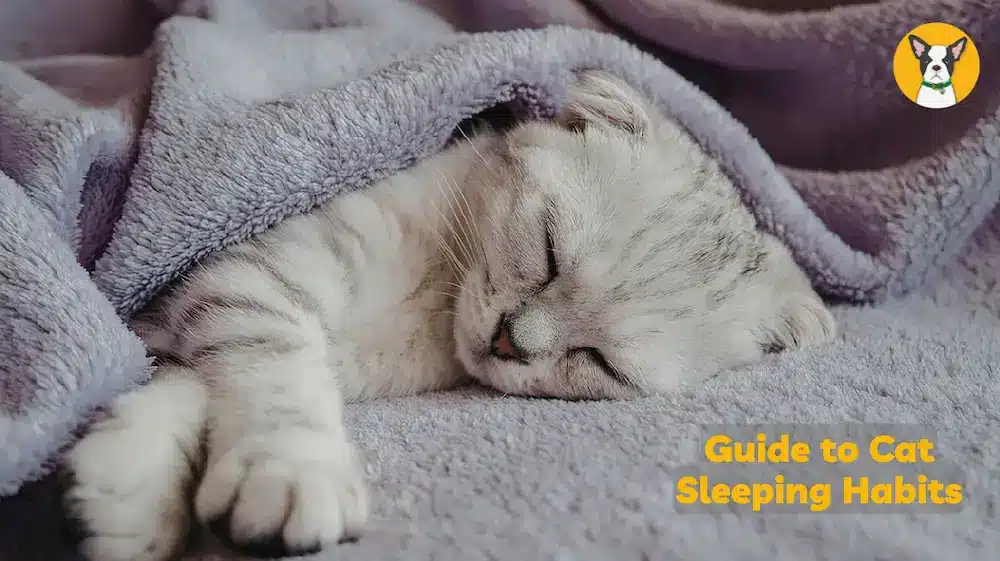


If you’ve ever wondered whether your cat sleeps to much, you’re not alone. Questions about cat sleeping habits come up constantly among cat parents, and honestly the answers are more interesting than you’d expect. The short version: cats sleep a lot, and most of the time that’s completely fine. But sometimes a change in how much or where your cat is sleeping is worth paying attention to. You know your cat best, and sudden changes in your cat’s sleeping habits or behavior are always something to look into.
Table of Contents
Why Do Cats Sleep So Much? It’s in Their Genes
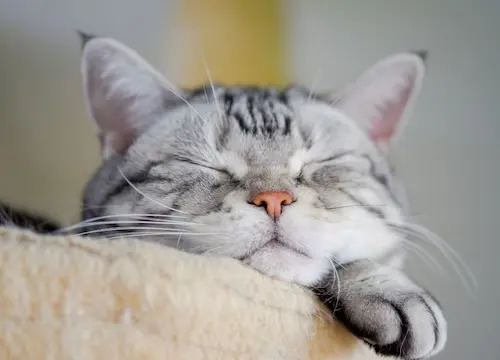 First, let’s clear something up. Cats aren’t actually nocturnal, even though it can feel that way when they’re thundering around your house at 3am. They’re crepuscular, which means they’re naturally wired to be most active at dawn and dusk. That’s when their prey is moving but the light is low enough to give a predator the advantage.
A lot of your cat’s “sleep” isn’t even deep sleep. They’re dozing, staying in a light rest state where they can spring into action at a moment’s notice. This is an evolutionary survival tactic and it’s why your cat can go from completely still to across the room in about half a second. The other piece of this is that cats are sprinters, not endurance athletes. A hunt is short, explosive, and incredibly physical. All that recharge time they spend sleeping is what makes those bursts of energy possible.
Beyond that, cats sleep more when they’re bored. If there isn’t enough going on in their environment to hold their attention, sleep becomes the default way to pass time for a bored cat.
Cats also sleep more when they’re stressed. A stressed cat that feels anxious or unsafe in their environment will often withdraw into sleep as a coping mechanism, which can look a lot like contentment if you’re not watching closely.
Illness and pain are also reasons cats might sleep more. Lots of ailments in cats, including kidney disease, diabetes, hyperthyroidism, and joint problems can all show up first as a change in sleep patterns.
How Much Sleep Is Normal for Cats?
How much sleep is normal for cats can depend a lot on your cat’s age.
Kittens can sleep up to 20 hours a day, which is adorable but also much needed. Their bodies are producing growth hormones around the clock and that process happens during deep sleep. All that chaotic kitten play followed by immediate unconsciousness is completely normal and stinking cute.
Adult cats settle into a range of about 12 to 16 hours of sleep a day. That’s their baseline, balancing active time for eating, grooming, and playing with long stretches of rest that keep their immune system and energy levels where they need to be.
Senior cats often creep back up toward kitten territory. They tire more easily, and if they’re dealing with joint discomfort or other age-related issues, they’ll naturally choose rest over movement more often. If your older cat is sleeping more than they used to, it isn’t always a red flag, but it is worth keeping an eye on.
The Cat Sleep Cycle: Catnaps vs. Deep Sleep in Cats
About 70% of your cat’s sleep time is light dozing, ears still rotating toward sounds, eyes sometimes slightly open. They’re resting but not fully offline. The other 30% is genuine deep sleep, REM sleep, the kind where the body actually repairs itself and the brain processes the day. This is the good stuff, and it’s vital for their mental and physical health.
That twitching you see during deep sleep, the paddling paws, the chattering, the whisker flickers, that’s almost certainly dreaming. Research suggests cats dream about their daily experiences, so your cat is probably chasing something or defending their food bowl. It’s a sign their brain is doing exactly what it should be doing.
When Your Cat’s Sleeping Habits Change: Signs to Look Out For
Changes in cat sleeping habits can often be the first signal that something is off with your cat’s health. You know your cat best, so just pay attention to changes in their sleeping habits, diet, behavior, and any other sudden changes that might signal something is off with your cat’s health.
- Sleeping significantly more than usual, especially combined with hiding, skipping meals, or being hard to wake up, can point to illness, chronic pain, or depression.
- Sleeping less, particularly in senior cats who start pacing or vocalizing at night, can be a sign of hyperthyroidism or feline cognitive dysfunction.
- Sleeping in new or unusual spots is one that gets overlooked a lot. A cat that suddenly starts sleeping in the litter box or hidden under furniture in a way they’ve never done before is often trying to tell you something. Stress and physical discomfort are the most common culprits.
Supporting Better Sleep for Restless or Aging Cats
As cats get older, sleep can become more fragmented and less restorative. Joint discomfort makes it hard to settle into a comfortable position. Cognitive changes can cause confusion and restlessness once the house goes quiet at night, something often called sundowning.
A few simple things can make a real difference. Start with the basics. Make sure your cat has a genuinely quiet space that’s theirs, away from household noise and foot traffic, where they can reach deep sleep without being disturbed. A pet-safe heated bed can make a significant difference for senior cats who struggle to regulate their temperature and have stiff joints that make getting comfortable harder than it used to be.
Check their favorite napping spots too, and consider accessibility for your senior cat. If they used to love the back of the couch but are sleeping on the floor more often, it might not be a preference change. It might be that jumping up hurts now. Adding a ramp or some steps gives them access back to the spots they can’t easily reach any longer.
Daytime enrichment for cats matters more than most people realize for nighttime sleep quality. A cat that has been mentally and physically engaged during their waking hours is a cat that actually rests when they sleep. Puzzle feeders, interactive play sessions in the early evening, window perches with a view, even hiding treats around the house for them to hunt, all of it contributes to a more settled cat when the lights go out. If your cat’s nighttime restlessness is paired with a pretty boring daytime routine, that’s a good place to start.
Routine also genuinely helps, especially for senior cats showing signs of cognitive changes. Feeding, play, and bedtime at consistent times gives their internal clock something to anchor to, which can reduce nighttime confusion significantly.
CBD Oil for Cats: Natural Support for Calm and Restful Sleep
 Sometimes lifestyle adjustments aren’t quite enough on their own, particularly for cats dealing with everyday stress, discomfort, or age-related cognitive changes. This is where full-spectrum CBD for cats can make a real difference.
Your cat has an endocannabinoid system, often called the ECS, that plays a direct role in regulating sleep-wake cycles, mood, and overall balance. When a cat is dealing with chronic stress or physical discomfort, that system can use some extra support, and restful sleep becomes harder to achieve. Full-spectrum CBD works with the ECS to help restore that natural balance.
For cats who seem easily stressed or unsettled, CBD helps promote a sense of calm without dulling their personality or sedating them. For cats experiencing everyday stiffness and mobility changes, supporting comfort and ease of movement means they can actually find and stay in a comfortable position through the night. And for cats experiencing sundowning or nighttime restlessness, a calming dose given 30 to 60 minutes before bed can help bridge the gap between that unsettled state and genuine rest.
What it isn’t is a sedative. It doesn’t override your cat’s natural rhythms or knock them out. It just helps their body find its own way back to a calm, balanced state. We recommend CALM: Full Spectrum CBD Oil for Cats for cats dealing with everyday stress, restlessness, or age-related sleep disruption. It’s specifically formulated for feline biology and designed to support a steady, calm nervous system without harsh ingredients or synthetic additives.
Mushrooms and Adaptogens: Long-Term Sleep and Cognitive Support for Aging Cats

If you’re looking for natural long term support for an aging cat’s sleep quality and cognitive health, functional mushrooms and adaptogens are worth adding to your senior cat’s routine.
Medicinal mushrooms like Lion’s Mane, Reishi, and Cordyceps support the underlying systems that regulate sleep, cognition, and stress response over time. Reishi in particular has a long history of use for promoting relaxation and restful sleep. Lion’s Mane supports neurological health and cognitive function. Cordyceps helps with energy balance, which sounds counterintuitive for sleep but a cat with better energy regulation during the day naturally rests better at night.
Our MycoCat Clarity blend combines all three alongside Bacopa Monnieri and Ashwagandha specifically to support cognitive function, nervous system health, and emotional balance in aging cats. It’s the same clinically backed formula behind our Senior Dog Study, which showed that aging pets with cognitive decline experienced longer and more restorative sleep after regular use, as well as 81% of dogs showing improvement or stabilization in their signs of cognitive decline after using Clarity, and we’ve heard similar things from cat parents using MycoCat Clarity consistently over time.
If your senior cat seems more restless at night, less sharp during the day, or just not quite themselves, Clarity is where we’d point you. Used daily it supports the kind of deep, systemic wellness that shows up as a calmer, more rested, more present cat over time.
Cat Sleeping Habits FAQ
How long do cats sleep a day?
When it comes to how long cats sleep, the average for a healthy adult cat is somewhere between 12 and 16 hours a day. Kittens and seniors often need more, sometimes closer to 20 hours out of every 24. If your cat is hitting the higher end of that range and seems otherwise happy and engaged during their waking hours, that’s usually completely normal. If you notice they’re sleeping significantly more than their personal baseline and seem less interested in food or play, that’s worth a conversation with your holistic vet.
Why do cats sleep so much?
The short answer is biology. Cats are natural predators who rely on short, explosive bursts of energy to hunt, and all that sleep is how they recharge between those bursts. Their crepuscular nature means they’re wired to be most active at dawn and dusk, so sleeping through a big chunk of the day is just how their internal clock works. Boredom and everyday stress can also push cats toward more sleep than they actually need, which is worth keeping in mind if your cat’s routine has been fairly quiet or uneventful lately.
Why do cats twitch in their sleep?
Cats twitch in their sleep because they experience REM sleep just like we do, and during that deep sleep phase they’re almost certainly dreaming. Those paddling paws and twitching whiskers are likely your cat acting out a hunt or a play session in their sleep. It’s a sign their brain is functioning exactly as it should and that they’re reaching the deep, restorative part of their cat sleep cycle. If the movements seem stiff or violent rather than soft and relaxed, or your cat doesn’t respond to their name, that’s worth checking with your vet.
What does a normal cat sleep cycle look like?
Cats sleep in a polyphasic pattern, meaning lots of shorter sleep bursts throughout the day rather than one long stretch like we do. About 70% of that is light dozing where they’re still somewhat alert to their surroundings. The remaining 30% is deep REM sleep where the real physical and mental restoration happens. Supporting that deeper sleep, especially in senior cats, is one of the reasons we developed MycoCat Clarity, which combines Lion’s Mane, Reishi, and Cordyceps specifically to support cognitive function and restful sleep in aging cats.
Why is my cat sleeping more than usual?
A cat sleeping more than usual is one of those things that’s easy to overlook but worth paying attention to. Sometimes it’s benign, a change in weather, a quieter household, or just a lazy stretch. But it can also be an early signal of underlying discomfort, stress, or illness. If the extra sleep is paired with changes in appetite, hiding, or less interest in things they normally enjoy, a vet visit is a good idea. For cats whose increased sleep seems tied to everyday stress or age-related changes, our CALM: Full Spectrum CBD Oil for Cats can help support a more balanced, settled nervous system.
Do cats dream?
Almost certainly yes. Cats experience REM sleep and regularly show behaviors during it, twitching, soft vocalizations, whisker movement, that strongly suggest they’re dreaming. Given what we know about cats and sleeping habits, those dreams are probably hunting or play related. It’s completely normal and honestly pretty adorable.
What are signs of stress in a cat?
Cats and sleeping habits are closely connected to their stress levels. A stressed cat might sleep more than usual as a way of withdrawing from an environment that feels unpredictable, or they might become restless and unable to settle at all. Other signs include over-grooming, hiding, changes in litter box habits, and reduced appetite. A consistent daily routine helps a lot, and for cats that need a little extra support finding their calm, many pet parents turn to CBD pet products, we recommend CALM: Full Spectrum CBD Oil for Cats, specifically formulated to promote a relaxed, balanced nervous system without sedating them.
Do cats get bored of sleeping all day?
Sometimes they sleep because they’re bored. Without enough mental stimulation during their waking hours, sleep becomes the path of least resistance. The connection between how much cats sleep and how engaged they are during the day is real. Try puzzle feeders, interactive play sessions timed around their natural dawn and dusk activity windows, or hiding treats around the house for them to hunt. A more stimulated cat during the day is almost always a more restful cat at night.
Is it normal for senior cats to sleep more?
Yes, it’s a normal part of aging, but it’s also worth paying closer attention to sleep quality as cats get older. Senior cats dealing with cognitive changes often experience more fragmented, less restorative sleep and can become restless or confused at night. If you’re noticing that in your older cat, MycoCat Clarity was specifically formulated to support cognitive function, nervous system health, and more restful sleep in aging pets. In our senior pet study, pets experiencing cognitive decline showed improvement in sleep quality after regular use of the Clarity formula.
